


Navigating Independent Driving: How Sat-Navs, Road Signs, and Lane Discipline Save Your Test
The independent driving section makes up roughly 20 minutes of your practical exam—about half of your total test time. Introduced by the Driver and Vehicle Standards Agency (DVSA) to mirror real-world driving, this segment tests your ability to navigate safely without step-by-step guidance from your examiner.
Many learner drivers dread this part of the test, assuming a single wrong turn means an automatic fail. However, the DVSA isn't testing your internal GPS; they are assessing your decision-making, observation, and lane discipline under real road conditions.
Sat-Nav vs. Traffic Signs: What to Expect
Before you begin, your examiner will ask you to pull over safely to set up the independent driving portion. You will be tasked with navigating using one of two methods:
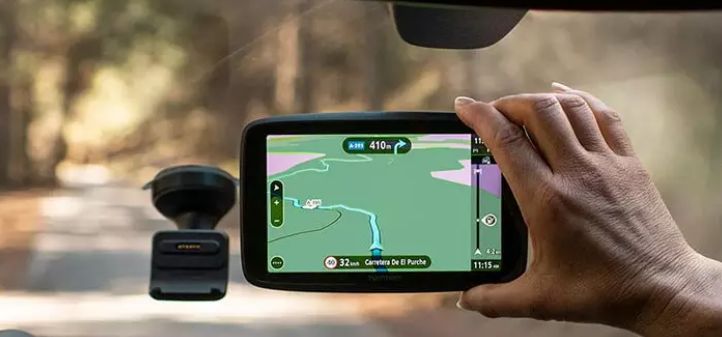
Sat-Nav Navigation (80% of Tests): The examiner will provide and configure a GPS unit (typically a TomTom Start 52) mounted securely on the dashboard. You cannot use your own smartphone or navigation device.
Traffic Sign Navigation (20% of Tests): The examiner will ask you to follow road signs toward a specific destination (e.g., "Follow signs for the City Centre until further notice").
The "Wrong Turn" Rule: Myths vs. Reality
One of the biggest misconceptions about the UK driving test is that taking a wrong turn leads to an instant failure.
Going Off-Route Is NOT a Fault: If you take the wrong exit at a roundabout or turn down the wrong street, you will not receive a driving fault, provided the manoeuvre was executed safely.
Automatic Recalculation: If you are using a sat-nav, the device will recalculate a new route automatically. If you are following road signs, the examiner will step in to guide you back onto the test route.
Where Faults Actually Occur: Major faults occur when candidates panic after realizing they've made a navigation error—such as cutting across lanes last minute, slamming on the brakes, or failing to check mirrors before changing course.
Top 4 Major Faults During Independent Driving
To keep your test result clean, avoid these common pitfalls during the 20-minute section:
Staring at the Sat-Nav Screen: Treat the sat-nav like a mirror. Use quick, 1-second glances to check your next direction, keeping your main focus on the road ahead.
Late Lane Changes: Realizing your turn is coming up and cutting across dashed or solid lines without proper MSPSL (Mirror, Signal, Position, Speed, Look) checks is an automatic major fault.
Ignoring Road Markings: Following a sat-nav blindly can cause you to miss local restrictions, such as bus lane operational hours or turn-only markings painted on the tarmac.
Fixating on Signs: Looking for overhead destination signs can cause drivers to miss hazards directly in front of them, such as slowing traffic or zebra crossings.
Pass-First-Time Strategy
Practice Mirror-Signal Routines: Always check your interior and door mirrors before adjusting your speed or positioning for a turn.
Commit to Your Lane: If you get into the wrong lane approaching a roundabout or junction, stay in that lane safely. It is far better to go the wrong way safely than to force a dangerous last-second lane correction.
Evaluate Your Core Skills: Before booking your test on GOV.UK, make sure your driving instructor has evaluated your independent navigation skills as part of the DVSA 27 Core Skills checklist.