

For many learner drivers, moving beyond quiet residential streets can feel like a massive leap. However, mastering varied road types isn’t just a milestone to tick off before your practical test—it is the foundation of becoming a safe, confident, and independent driver for life.
In the official DVSA curriculum, Road Types (Skills 21–23) covers the three most challenging driving environments you will encounter: country roads, dual carriageways, and motorways.
Here is everything you need to know about navigating these faster, busier, and more complex environments, and why mastering them during your driving lessons is crucial to passing your test on the first attempt.
What are Driving Test Skills 21–23?
As you progress toward your driving test, your instructor will transition you from urban areas to high-speed networks. Skills 21 through 23 ensure you can safely adapt your speed, observations, and vehicle handling across distinct road layouts:
🌿 1. Country Roads (Skill 21)
Don’t let the scenic views fool you; rural roads are statistically the most dangerous for new drivers. Driving on country roads requires acute hazard perception. You must learn to navigate sharp bends, hidden dips, narrow lanes, and uneven surfaces while managing your speed appropriately—often shifting gears frequently to maintain total control. You also need to stay alert for unique hazards, such as agricultural machinery, cyclists, and wildlife.
🛣️ 2. Dual Carriageways (Skill 22)
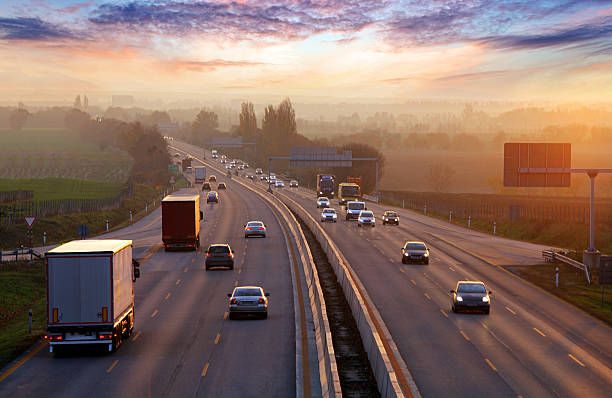
Dual carriageways introduce you to much faster traffic flows and multi-lane discipline. Key areas of focus under Skill 22 include:
Slip Lanes: Mastering how to match the speed of the traffic already on the main road to merge smoothly.
Overtaking Safely: Utilizing the Mirror-Signal-Manoeuvre (MSM) routine to change lanes without causing other drivers to brake.
Exit Strategy: Anticipating your exit early and positioning your vehicle correctly well in advance.
🚗 3. Motorways (Skill 23)
While motorways are legally permitted for learner drivers only when accompanied by an approved driving instructor (ADI) in a dual-controlled car, they are vital for real-world preparation. Motorway driving focuses on handling continuous high speeds (up to 70 mph), understanding smart motorway signs, interpreting overhead gantries, and maintaining safe stopping distances (the two-second rule) in fast-moving streams of traffic.
Why Road Types Matter: Adapting to Complexity
The true secret to tackling Skills 21–23 is anticipation. The faster a vehicle travels, the less time you have to react. Mastering these road types sharpens your driving instincts in three major ways:
Advanced Hazard Perception: High-speed driving forces your eyes further down the road. You learn to scan the horizon rather than just looking at the car directly in front of you.
Speed Management: You will quickly learn that the national speed limit is a limit, not a target. A blind bend on a country lane requires a completely different speed strategy than a clear, three-lane dual carriageway.
Enhanced Spatial Awareness: Merging with traffic traveling at 60 or 70 mph requires precise judgment of gaps and vehicle acceleration.
Top Tips to Master High-Speed Roads on Your First Attempt
Keep Your Distance: Always maintain a safe gap between your car and the vehicle ahead. Double this distance if the roads are wet or icy.
Exaggerate Your Mirror Checks: At high speeds, situations change in the blink of an eye. Check your rearview and side mirrors constantly before changing lanes or adjusting your speed.
Read the Road Ahead: Look out for warning signs, countdown markers for exits, and changing speed limits early so you can react smoothly rather than braking suddenly.
Get Test-Ready with Cambridge Driving Academy
Transitioning to faster roads can be intimidating, but you don't have to face it alone. At Cambridge Driving Academy, our experienced local instructors specialize in taking the stress out of high-speed driving.
Whether you are looking for an automatic driving school or prefer a patient female driving instructor in Cambridge, we tailor our driving lessons to build your confidence step-by-step. We will guide you through local country lanes, dual carriageways, and slip roads until highway driving feels like second nature.